Dr. Robby is Not Your Friend
No real people were harmed in the making of this fictional narrative.
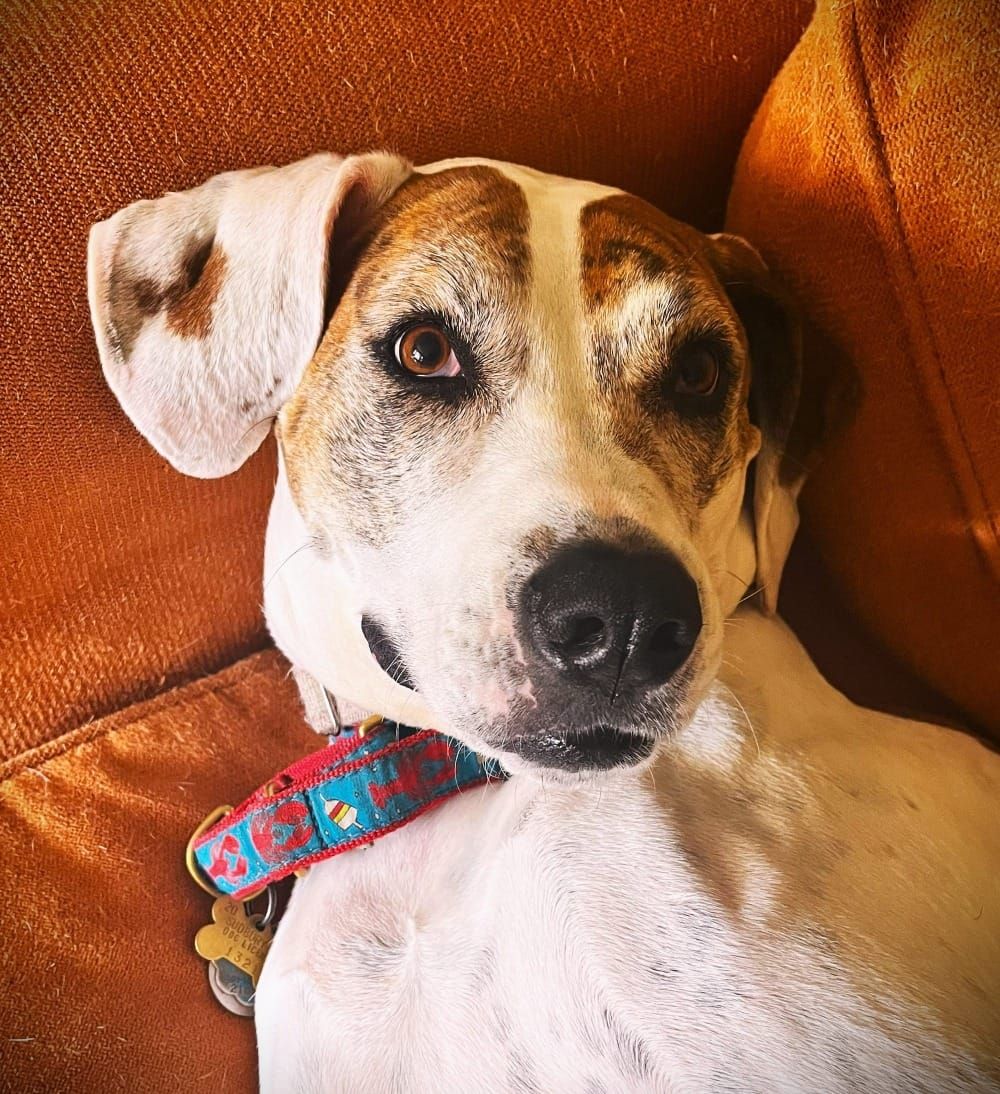
Sorry for the giant picture of my dog. I am still figuring out how to use this platform. Hopefully, if you were a subscriber when I hosted this newsletter on beehiiv, you got this in your inbox no problem. If not, then please check your spam folder and, if it's there, mark woman-screams-at-cloud@ghost.io as Not Spam. If you can't even find it there (or if you haven't been subscribed before) feel free to subscribe at the bottom of the page.
I am opening this post by thanking my friend (and talented author) P.H. Low for introducing me to the poem, Karma Affirmation Cistern Don’t Be Afraid Keep Going Toward the Horror by Gabrielle Calvocoressi. Yes, go ahead and open that tab. You don’t have to read the whole thing before reading this post, but it’s an excellent piece, so I do highly recommend it. I think the poem is probably about many things, and will be about different things to different people, but for me it’s largely about accepting that the world is both ugly and wonderful, and that you need to accept both of these things in order to move past them and find what joy you can. It’s also a bit about writing.
Specifically, I want to touch on these lines:
No need to make it beautiful
for some future reader. Just say how much
you wanted to hurt someone like you got hurt.
Okay, so yeah, what does that have to do with Dr. Robby from the hit HBO TV show on The Pitt? I’m glad you asked!
(Also, if I am a novelist, why do I keep writing about TV in these posts? It's because the most widely read novel is still not as popular as even a middling TV show, so it's easier to find common ground to discuss narrative using TV. Also I know we're months both before and after the next/more recent season of the show, but this is evergreen content. And my summer has been nutty. Give me a break.)
Spoilers ahead! Personally, I don’t think they reveal much, and The Pitt also isn’t the type of show that relies heavily on plot surprises for engagement, but I respect some like zero information going into a new show.
For those who don’t know, The Pitt focuses on an emergency room at a busy hospital in Pittsburgh. The show follows a single shift each season, with each episode following exactly one hour of that shift. In season 1, there is a mass casualty event that leads Dr. Robby, played by fake physician extraordinaire Noah Wyle, to have a debilitating panic attack when he flashes back to what hospital teams across the country were dealing with at the height of the COVID pandemic. The audience, including the internet commentariat, was deeply sympathetic to Robby and his visceral, largely private self-loathing.
In season 2, however, we’re not dealing with a mass casualty event. Instead, we’re dealing with something far more common based on my own experiences in medicine (yes, veterinary medicine, but there’s more overlap than you’d think). There’s no one big crisis, but instead a relentless stream of mini-crises, one after another after another. It’s the kind of buildup that doesn’t ever let you catch up or take a full breath, because there’s always some new, slightly more urgent task you have to tackle. These days are exhausting in a way that having a GIANT EVENT isn’t, because at least that GIANT EVENT looks as outsized as it feels. You can point to it and say: hey, this is why I am tired and stressed! When it’s the steady wave of just doing your job x 10, then it’s much harder to explain to someone on the outside how draining it is.
So, not surprisingly to anyone who’s been in a similar environment, what this triggers in Robby is not an inward-focused panic attack, but instead outward facing frustration growing into anger. Robby is done with just about everybody, including some of his favorite people, and everyone can see it. In fact, it metastasizes into the rest of the staff, as they all get snippy, and tired, and irritable.
The audience reaction to this version of Dr. Robby was not nearly as supportive. A good portion of the fandom, actually, full on turned on the character. He’s a jerk, he’s abusive, he’s a misogynist. Some claimed they knew all along he was the bad guy. Some even equated the character’s actions with the actor’s or proclaim they no longer want to watch the show. This isn’t a situation where people are examining and discussing the motivation behind a character’s actions, and how that might relate to real-life issues in US healthcare. Instead, this is a situation where people are expressing disappointment and anger over how they’ve been personally betrayed by Dr. Robby. (And they are very serious about it!)
Beyond the rather bizarre parasociality of it all, what’s wrong with judging a fictional character like he’s a real human being?
It’s that it’s entirely missing the point of fiction.
When I conceive of a new character and start writing about them, the last thing on my mind is: “wow, I’d love to have a friend/boss/spouse/etc just like this!” It’s often the exact opposite, actually. Let’s go back to those lines of poetry:
No need to make it beautiful
for some future reader. Just say how much
you wanted to hurt someone like you got hurt.
Writing for me, and most writers I know, is about processing real life, not sanitizing it. It’s about exploring the worst things that happened to you, and the worst things you’ve done to other people. It’s about looking at all the millions of unique ways people damage one another. Yes, it can be about resilience, and bravery, and happy endings, too, but generally those all hit a lot of harder if they follow those resilient, brave, and happy characters being real shit heels first.
Imagine how boring books/TV/movies would be if every story focused on a character with impeccable morals facing off with a cartoon-style, mustache twirling villain. How does that challenge the audience? How does that help anyone grow or change, if the lesson we get over and over is that only people worth telling stories about are the ones who are never tired, who are never weak, who never lash out? The sad reality is, many world leaders – including the current US administration – have reached mustache-twirling levels of evil and they’re not even trying to hide it anymore. Do you really want a novel telling you that the only people who can win against such tyranny have to be perfectly even-tempered communicators, too? Are flawless individuals with impeccable politic positions and morals the only people worth rooting for?
Further, why, given the state of the world, is anyone wasting time getting angry on behalf of a made-up person who was fictionally harmed by another made-up person? (Sorry, Samira!) Is it maybe a distraction because real issues feel too big to face?
Fiction is not meant to be a substitute for real life. Instead, fiction should be a safe, non-binding way to explore issues you face in real life, often in a more intense and exaggerated way than reality, so that you can feel validated in your own emotions, or better understand an experience you had, or have more insight into what someone else is going through.
(As an aside, I will always been a little annoyed with the brilliant Kelly Link, because while reading her novel The Book of Love, I loathed the character of Laura, only to realize about halfway through the novel that if I were in a similar situation, I’d like behave exactly like Laura.)
In other words, let fictional people be shitty. Understand that they are almost certainly behaving that way that pisses you off on purpose. Understand that portrayal is not endorsement, but instead is a way of making you, the audience, ask yourself some difficult questions.
Then, maybe call up one of your actual friends, and yell about how frustrating those fictional characters and their bad decisions are together. Or just go for a walk with them, or something. Long after most people have forgotten who Dr. Robby is, those real people connections will be the ones that matter.
Something I’m reading/watching/listening to:
I've been in a sorta, kinda reading slump lately. Not that I haven't been able to finish books, but none of them have really grabbed me lately. Of the last 9 books I've started, I've paused reading two of them, and only really loved one of them. Which also means I've been reading sloooooow because I'm not terribly excited about what I'm reading. This isn't a craft thing, for the most part. Sometimes it is; some of these books had a lot of flaws. But for the most part, I simply didn't find them compelling through no fault of their own.
Enter Martyr! by Kaveh Akbar. It's been on my TBR list for a while, but not so long ago I took a virtual class with Tommy Orange (his novel There There is one of my all time faves) and he mentioned that he and Akbar are writing pals who often will exchange work for the sole purpose of cheering each other on. Anyway, glad I moved it to the top of the pile, because this is the sort of wry, insightful voice I've been looking for. The structure is not straightforward but supports the narrative well (I'll be tearing it apart later, I think) and I always appreciate a work of fiction that calls out a real life atrocity I wasn't familiar with. (Yes, I did learn about the 1921 Tulsa Massacre from Watchmen.) I'm only about 25% of the way in, but I feel confident I'll get a lot out of this one.
What I'm working on
Same book as last time! Books take a long time to write. This seems like as good a place as any to formally proclaim my distaste for letting generative AI anywhere near creative work.
(And yes, I do know that in today's capitalist society, we don't always have control over what software we have to use in the work that pays us the money we need to live. I'm not talking about that. I have one of those jobs, too.)
If you're using AI to write a story, or create a visual image/movie, or brainstorm ideas, then you're not making art any more than you were making art in kindergarten when your teacher passed out some simple line drawings and a 8 count box of crayons and told you to color it in. Truly, the whole point is doing it yourself. Even when it's hard. Especially when it's hard. There is always someone who has a reason why their use of gen-AI is justified, and I have never found a single one of these reasons compelling. #sorrynotsorry
Coming soon!
I recently did my first ever live fiction reading at Readercon 35, which was a lot of fun. Highly suggest doing a group reading with friends, as it gives the audience a nice mix of work and, if you're like me and hate talking about yourself, you can make someone else introduce you! (Thanks again, P.H.! Two shoutouts in the same newsletter!)
However, this section is titled "Coming soon" not "Recently happened" so let me also plug a new class for Metrowest Writers Guild. This one is for the novelists who are interested in traditional publishing. Basically, we'll be workshopping query packages, which are the materials you need to get yourself a literary agent. Perfect for someone who has never queried before or who has queried unsuccessfully and wished they'd had more guidance. Sign up here if you're interested, and consider clicking around to look at what else the Guild has to offer. I've taken fantastic one day and multi week courses there!
Thank you for reading! You can always find links to my work here on my website. If you have any questions/thoughts on what I’m writing/reading/watching or there are topics you’d like to see me cover, leave a comment or drop me a line here!
💕 Katie


